MITO / BMC LAB / 2026-10-28 / 4 MIN
Creatine for longevity, not just the gym
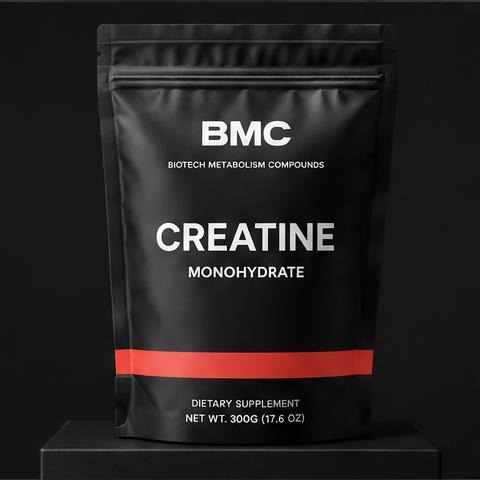
Creatine participates in the phosphocreatine system, which helps regenerate ATP during rapid energy demands. It is found mainly in muscle, although its metabolism is relevant in other tissues. The body synthesizes it and food supplies variable amounts. Creatine monohydrate is among the most researched forms in sports nutrition.
Resistance-training literature examines contributions to performance and muscular adaptations within specific programs. For a longevity discussion, the question is not whether a powder prevents aging, but how to maintain functional capacity alongside adequate activity and nutrition. Cognitive demands and sleep contexts are also being investigated, but evidence varies across populations and does not support universal statements.
The BMC specification lists a five-gram serving and micronized format. Micronized describes particle size, not a magical category of effectiveness. A well-designed routine and product-label instructions remain more important than promises of instant performance. Research on an ingredient should always be distinguished from verification of a particular finished product.
How to read the evidence
A biological mechanism is a possible explanation, not a guaranteed outcome. When interpreting research, distinguish laboratory studies, animal models and trials in people. Each level answers different questions. A change in an isolated cell does not automatically describe what happens when someone takes a compound within an actual routine, with nutrition, sleep, training and individual variation operating at the same time.
Check what was measured. A blood marker, a performance test and a subjective perception are not interchangeable. Sample size, duration, comparison group and funding help define the scope. A statistical result alone does not establish whether a difference has practical importance. Read the limitations before translating a conclusion into a purchase, and avoid assuming that a positive result in one population applies to every person.
Declared dose. Known context. Expectations proportional to the evidence.
From mechanism to label
A label should identify the ingredient, quantity per serving and format. In blends, total weight does not substitute for the quantity of each active. Two presentations with the same commercial name may differ in composition, concentration or number of servings. Compare equivalent data, rather than inferring potency from the size of a container, the color of its stripe or its price.
Batch documentation adds another layer. A useful certificate identifies the sample, method, date and parameters tested. Purity, identity and microbiological control are separate questions. A packaging photograph proves none of them. Nor does a generic mention of outside testing validate a particular batch: the information must be available and correspond to the product actually delivered. Ask what a measurement means before treating it as a complete quality assessment.
A considered routine
Compounds complement a routine; they do not replace adequate nutrition, regular movement or sleep. Before combining several, review repeated ingredients and cumulative amounts. A curated combo organizes a catalog selection, but is not a personalized prescription. Starting many changes simultaneously makes it harder to identify tolerance and evaluate which part of a routine contributes to a perceived difference. Keep expectations specific and leave room for uncertainty.
Consult a professional if you take medications, are pregnant, are breastfeeding or have compatibility questions. Follow the final product label and do not increase doses in an attempt to accelerate effects. Recording the product, serving and frequency can support a more informed discussion. Stopping after an unexpected reaction and seeking guidance is more reasonable than assuming every compound suits every person. Individual circumstances remain relevant even when a mechanism is scientifically plausible.
References and limitations
This note describes mechanisms studied in nutritional biochemistry and common criteria for evaluating trials in people. Reviews on protein metabolism, cellular cofactors and energy systems help frame the questions, but do not certify a BMC product. Consult original publications and methods; distinguish ingredient evidence from evidence for a particular formulation. This is educational material and is not intended to diagnose, treat, cure or prevent any disease.